
THE IMAGE of the entire hexagram: an open gate. A gate that offers a view of reality. Open eyes. Listening ears. Can they perceive reality as it is? And not just the soundbites, but especially the voices that are not too loud? Listening to what is said, but also to what is left unsaid?

The character of this chapter is called ‘guan’. On the left-hand side, you can see a bird that gives the character its name. Its eyes are wide open. At the top right, another open eye is drawn, with the character for ‘human’ underneath it. ‘Guan‘ therefore shows a bird and a human, both observing.

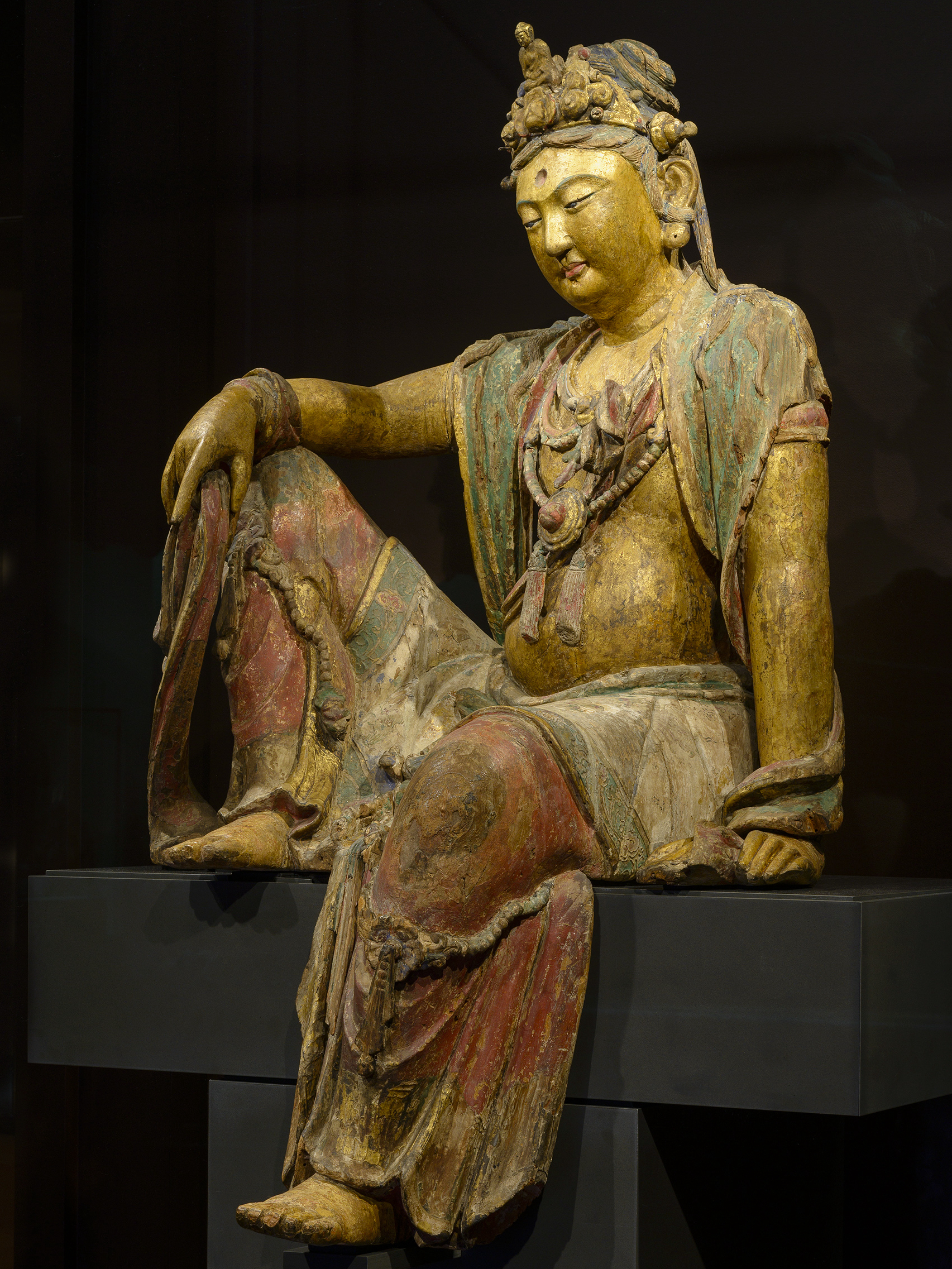
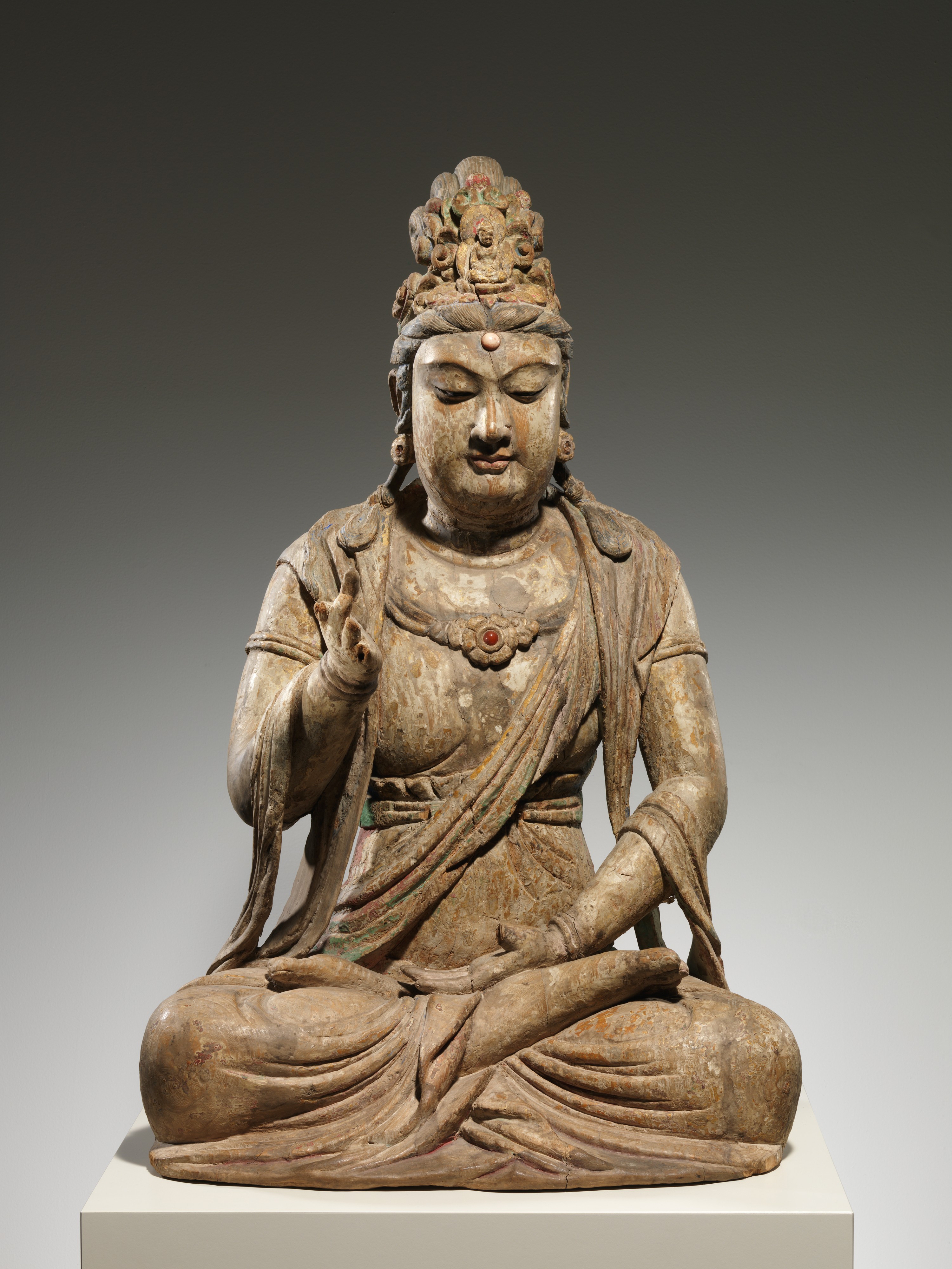
Observation is not limited to visual perception; listening is just as essential. Someone who is admired in the Buddhist world for her exceptional ability to listen is Guanyin. She is a bodhisattva, an enlightened being, who, out of compassion for her fellow human beings, does not rest on her laurels, but continues to help wherever she can, often in secret. And above all, she continues to listen. There is no shortage of people who act and talk. But who can listen to all those untold stories? Without commenting, or even offering well-intentioned advice. Who can listen to all the hidden suffering in the world?
We invoke your name, Avalokiteshvara. We aspire to learn your way of listening in order to help relieve the suffering in the world. You know how to listen in order to understand. We invoke your name in order to practice listening with all our attention and open-heartedness. We will sit and listen without any prejudice. We will sit and listen without judging or reacting. We will sit and listen in order to understand. We will sit and listen so attentively that we will be able to hear what the other person is saying and also what is being left unsaid. We know that just by listening deeply we already alleviate a great deal of pain and suffering in the other person.
Evoking the Bodhisattva’s Names
In India, where Buddhism originated, the bodhisattva was called Avalokitesvara and had a male outlook. When Buddhism reached China, the name changed to Guanyin and she took on a female appearance. As mentioned above, ‘guan’ 觀 means to observe, perceive, listen, and ‘yin’ 音 means ‘sound’. Guanyin is the one ‘who listens to the sound, to the suffering of the world’.
listen(v.)
c. 1200, listenen, from list “hear, hearken,” and probably also from Old Engish hlysnan (Mercian), lysna (Northumbrian) “to listen, hear; attend to, obey” (transitive), from Proto-Germanic *hlusinon (source also of Dutch luisteren, Old High German hlosen “to listen,” German lauschen “to listen”) …
etymonline.com
To be continued …